US Trucking Industry Update 2026
The US trucking industry update 2026 shows a market that is stabilizing after a difficult period, but still operating under heavy pressure. While freight demand is gradually returning, multiple factors are making operations more challenging for carriers across the country.
Fuel prices remain elevated, regulatory changes are tightening workforce availability, and compliance requirements continue to evolve. At the same time, shifts in freight movement and competition from rail are changing how loads are distributed across the supply chain.
This combination creates a market where opportunity exists, but only for operators who can manage costs, stay compliant, and make smarter operational decisions.
Current State of the US Trucking Industry
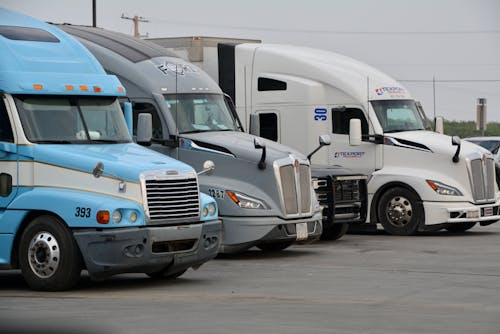
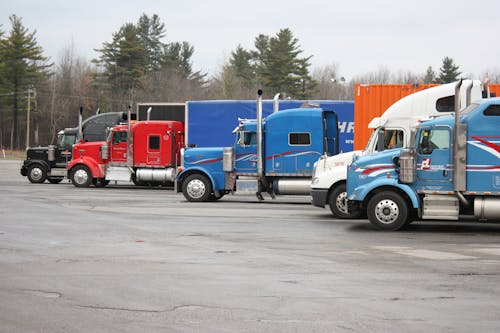
The trucking market in 2026 reflects a transitional phase. After a prolonged downturn, signs of recovery are visible, but the pace remains uneven. Freight volumes are improving in certain sectors, particularly retail and manufacturing, yet profitability is still under pressure.
Carriers are dealing with a mix of rising expenses and tightening capacity. Operational costs continue to climb, while the availability of drivers and equipment is becoming more limited. These opposing forces are shaping how the industry functions today.
Smaller carriers and owner-operators are facing the most pressure, as they often lack the financial flexibility to absorb sudden cost increases. Larger fleets, on the other hand, are better positioned due to structured pricing models and long-term contracts.
Overall, the trucking market recovery is real, but it is fragile and dependent on how well operators adapt to ongoing changes.
________________________________________________________________________________________________
TL;DR:
- Diesel prices are increasing operational costs and squeezing margins, especially for owner-operators
- New CDL requirements are reducing driver availability and tightening trucking capacity
- Freight demand is returning, but uneven capacity is pushing spot rates higher in key lanes
- FMCSA regulations and ELD compliance rules are becoming stricter, increasing operational pressure
- Rising insurance costs are adding another financial burden for carriers
- Adapting to market changes now requires better route planning, load selection, and cost control strategies
- 24/7 Truckin helps carriers improve efficiency with smarter load matching, real-time tracking, and better operational visibility
________________________________________________________________________________________________
Diesel Prices Are Increasing Operational Pressure
Fuel costs remain one of the most significant challenges in the trucking fuel costs USA landscape. Diesel prices have seen sharp increases, creating immediate pressure on margins across the industry.
For owner-operators, the impact is direct. Fuel expenses are paid upfront, while revenue is received later, creating a constant strain on cash flow. When rates do not adjust quickly enough, profitability declines.
Larger fleets often rely on fuel surcharges to offset these increases, but smaller operators do not always have that advantage. This imbalance continues to widen the gap between independent drivers and large carriers.
Higher diesel prices trucking 2026 trends also affect route planning. Longer routes with inefficient fuel usage can quickly reduce earnings per load, forcing operators to rethink how they manage trips.
[Rising fuel costs are not just increasing expenses, they are forcing operators to rethink how every mile is planned and executed.]
As fuel remains unpredictable, cost control and route efficiency are becoming essential for maintaining profitability.
Driver Shortage and CDL Rule Changes
The driver shortage trucking industry issue has taken a new turn in 2026 due to regulatory changes affecting workforce eligibility. Updated CDL requirements 2026 now place stricter conditions on licensing, including verification processes and language requirements.
These changes have reduced the number of eligible drivers entering or remaining in the workforce. Training schools are also seeing lower enrollment, which impacts the long-term supply of drivers.
As a result, trucking capacity shortage concerns are increasing. Fewer drivers mean fewer trucks on the road, which directly affects how quickly freight can move.
This shortage is not only a hiring problem but also a cost issue. Carriers are now competing more aggressively for qualified drivers, leading to higher wages and additional incentives.
[A shrinking driver pool does not just slow operations, it increases competition and raises the cost of keeping trucks on the road.]
The long-term effect is a tighter market where capacity becomes a key factor influencing freight rates and service reliability.

Freight Market Trends and Capacity Shifts
Freight market trends USA in 2026 show a clear imbalance between load availability and truck capacity. While demand is increasing in specific sectors, the number of available trucks is not rising at the same pace.
This imbalance is pushing spot rates trucking upward in certain lanes. However, these increases are not consistent across all regions, creating a mixed environment for carriers.
Freight shipping costs USA are also being influenced by broader supply chain adjustments. Companies are becoming more strategic in how they move goods, focusing on cost efficiency and reliability.
Supply chain trucking updates indicate that businesses are prioritizing predictable delivery timelines over simply choosing the lowest-cost option. This shift benefits carriers who can offer consistent performance.
[Freight demand is returning, but the real advantage lies with carriers who can balance availability with operational efficiency.]
Overall, the market is moving toward a more selective environment where efficiency and reliability determine success.
Rail Competition Is Reshaping Freight Movement
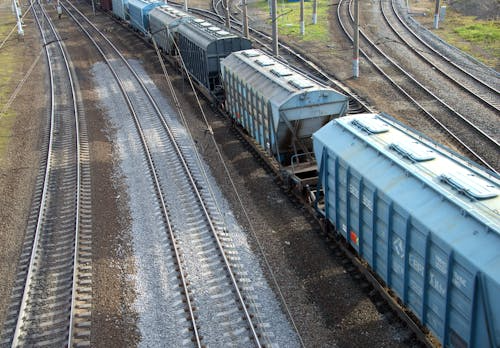
Rail vs trucking freight dynamics are becoming more competitive in 2026. As trucking costs increase, rail operators are positioning themselves as a cost-effective alternative for long-distance freight.
Intermodal solutions are gaining traction, allowing companies to combine rail and trucking to optimize costs. This shift is particularly noticeable in routes where fuel costs significantly impact pricing.
Rail is not replacing trucking, but it is capturing a larger share of freight that was traditionally handled by trucks alone. This creates additional pressure on carriers to remain competitive.
For trucking companies, this means focusing on areas where they provide clear advantages, such as last-mile delivery, flexibility, and faster turnaround times.
FMCSA Regulations and Compliance Changes
FMCSA regulations update in 2026 reflects a stricter approach to compliance across the industry. One of the most notable changes involves the removal of certain ELD devices from the approved list.
Carriers using non-compliant devices are now required to replace them within a limited timeframe. This adds both cost and operational disruption, especially for smaller fleets.
ELD compliance rules are becoming more critical as enforcement increases. Accurate tracking of driving hours, vehicle usage, and compliance data is no longer optional.
In addition, authorities are increasing oversight on registration practices, including misuse of USDOT numbers. These measures are aimed at improving safety and accountability.
[Compliance is no longer just a regulatory requirement, it is becoming a core part of operational reliability in trucking.]
Failure to meet these standards can result in penalties, downtime, and loss of business opportunities.
Rising Insurance Costs and Risk Exposure
Trucking insurance rates USA are becoming a growing concern as costs continue to rise. Insurance providers are reassessing risk levels, especially as accident costs and medical expenses increase.
Current minimum coverage levels are being questioned, with discussions around whether they are sufficient for modern operating conditions. This could lead to future policy changes and higher premiums.
For carriers, this adds another layer of financial pressure. Insurance is no longer a fixed cost but a variable factor that can significantly impact profitability.
Risk management is becoming more important, as maintaining a strong safety record can influence insurance costs over time.
What This Means for Trucking Businesses in 2026
The trucking industry challenges in 2026 are interconnected. Rising costs, reduced capacity, and increased regulation are all influencing how businesses operate.
To remain competitive, carriers need to focus on efficiency. This includes better route planning, smarter load selection, and improved cost management.
Trucking operational costs must be closely monitored, as even small inefficiencies can reduce margins in a high-cost environment. At the same time, understanding trucking demand forecast trends can help operators position themselves in stronger markets.
The ability to adapt quickly is becoming a key advantage. Carriers that rely on outdated processes may struggle to keep up with changing conditions.
Navigating the 2026 Trucking Market with Better Tools
The US trucking industry update 2026 makes one thing clear: success is no longer just about moving freight; it is about how efficiently it is done.
As costs continue to rise and competition increases, carriers need tools that help them make smarter decisions. From optimizing routes to finding better loads, efficiency is now directly tied to profitability.
Platforms that bring visibility, control, and flexibility into operations can make a measurable difference. Instead of reacting to market changes, carriers can position themselves ahead of them.
For those looking to stay competitive, adopting smarter systems is not optional. It is the next step toward building a more stable and profitable operation in a changing trucking landscape.
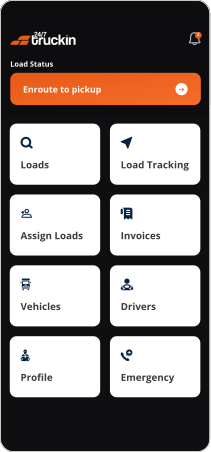
This is where platforms like 24/7 Truckin become valuable. Instead of managing loads, tracking, and communication across multiple systems, carriers can operate within a single streamlined environment.
With features such as smarter load matching, real-time tracking, integrated contract handling, and route optimization support, carriers can reduce inefficiencies and improve overall performance.
For owner-operators and small fleets, this means better visibility into available loads, improved planning for fuel efficiency, and more control over day-to-day operations.
For growing carriers, it creates a scalable system that can support expansion without increasing operational complexity.
In a market where margins are tight and competition is increasing, the ability to operate efficiently is a direct advantage. Tools that simplify workflows and improve decision-making are no longer optional; they are essential.
If you are looking to stay competitive in 2026, adopting a smarter operational approach with platforms like 24/7 Truckin can help you reduce costs, improve load management, and position your business for long-term stability. Get in touch with us today to learn more.