What are Trucking Rates?
Trucking rates refer to the cost of transporting goods via truck, typically calculated per mile or per load.
These rates are essential in the logistics industry, as they directly impact shipping costs and profitability for both businesses and drivers.
Understanding trucking rates is crucial for making informed decisions in freight transportation, whether you’re a business owner, broker, or driver.
“Several factors influence trucking rates, such as distance, weight, and the type of freight being transported.”
Seasonal trends, market conditions, and regional differences also play a role in shaping the rates.
By understanding these elements, businesses can better plan their shipments, optimize costs, and maximize efficiency.
In this guide, we’ll dive deeper into how trucking rates are calculated, what factors affect them, and tips on how to optimize and negotiate better rates to ensure success in the trucking industry.

________________________________________________________________________________________________
TL;DR:
- Trucking rates represent the cost of transporting goods by truck, influenced by factors like distance, cargo type, weight, and market conditions. They are calculated per mile or per load.
- Dry van rates range from $2.50-$3.00/mile, flatbed rates $3.00-$3.50/mile, and reefer rates $3.25-$3.75/mile, with variations due to seasonality, cargo requirements, and regional demand.
- Key components include base rate, distance, cargo weight/volume, freight class, fuel prices, and tolls, which all contribute to the total cost.
- Seasonal peaks like holidays or harvests drive up rates, while regional disparities arise from urban congestion, rural truck availability, or cross-border regulations.
- Expenses like tolls, driver wages, fuel surcharges, and maintenance are often overlooked but significantly impact overall costs.
- Digital platforms, predictive pricing, and route optimization software streamline cost management, increase transparency, and enhance rate negotiations.
________________________________________________________________________________________________
What Is the Average Trucking Rate?
The average trucking rate refers to the typical cost of transporting freight by truck, which can vary depending on several factors such as the type of cargo, distance, and the region in which the goods are being transported.
National averages provide a baseline for trucking rates, but these averages can fluctuate due to seasonal changes, regional demand, and market conditions.
For example, dry van rates are generally stable but can experience seasonal increases during peak periods like holidays.
Flatbed rates tend to be higher due to the specialized nature of the trucks, while reefer trucking rates are influenced by the need for temperature control, which adds to the cost.
“Recent industry averages show that dry van rates typically range from $2.50 to $3.00 per mile, flatbed rates range from $3.00 to $3.50 per mile, and reefer rates can go from $3.25 to $3.75 per mile.”
Understanding average trucking rates is essential for businesses and drivers when setting realistic pricing and budgeting for transportation costs.
It helps them gauge if they are paying or charging within market norms, adjust for seasonal fluctuations, and plan accordingly for transportation expenses.
Recognizing regional differences and the impact of market demand allows for more accurate cost-per-mile analysis and better financial planning. Watch this youtube video to learn more about trucking rates.
How Are Trucking Rates Calculated?
Trucking rates are calculated based on several key components that help determine the total cost of transporting goods.
Understanding these components is essential for both drivers and businesses to estimate and negotiate rates effectively.
- Base Rate: This is the starting point for any trucking rate and typically covers the basic cost of the service.
It often varies by truck type, such as dry van, flatbed, or reefer, and serves as the foundation for the rate calculation.
- Distance: The distance traveled significantly impacts trucking rates. Longer hauls naturally cost more due to the increased time and fuel required.
Trucking rates often use a cost-per-mile calculation, where the total rate increases as the distance to be covered grows.
- Weight or Volume: The weight or volume of the cargo affects how much a trucking company charges.
Heavier or bulkier loads require more resources, such as fuel and time for loading and unloading, resulting in higher rates.
- Freight Class or Type: The type of freight, such as hazardous materials, temperature-sensitive items, or oversized cargo, also influences the rate.
Certain freight classes demand specialized equipment or handling, which can increase the cost.
In addition to these factors, other elements like fuel prices, tolls, and surcharges can also contribute to the overall trucking rate.
These additional costs fluctuate depending on market conditions and route-specific factors.
“Understanding these key components of trucking rate calculation helps both businesses and drivers make informed decisions when planning and negotiating shipments.”

Factors Influencing Current Trucking Rates
Trucking rates are affected by various market conditions and external factors, which can cause fluctuations throughout the year.
Understanding these influences is crucial for businesses and drivers to adapt to the changing landscape of logistics pricing.
1. Supply and Demand
One of the primary drivers of trucking rate fluctuations is the balance between supply and demand.
When demand for shipping services exceeds the available truck capacity, rates tend to rise.
Conversely, during times of lower demand, rates may drop, as there is less competition for loads.
2. Seasonal Changes
Seasonal trends also play a significant role in trucking rates.
For example, peak seasons such as holiday periods or harvest seasons lead to higher demand, pushing rates up.
On the other hand, off-peak times often see lower rates due to reduced demand.
3. Regional Disparities
Trucking rates can vary greatly depending on the region.
Areas with higher demand or fewer available trucks may experience elevated rates, while regions with more truck capacity or less demand may offer more competitive rates.
4. External Factors
Fuel prices, economic trends, and government regulations can all impact trucking rates.
For instance, when fuel prices rise, carriers often adjust their rates to compensate for the increased fuel costs.
Similarly, economic shifts, such as a recession or inflation, can affect overall shipping costs.
5. Spot vs. Contract Rates
Spot rates are typically more volatile and fluctuate with market conditions, while contract rates are more stable, based on long-term agreements.
The movement between spot and contract rates can significantly impact overall trucking rate fluctuations.
By understanding these factors, businesses and drivers can better navigate the complexities of trucking rates and make more informed decisions.
Types of Trucking and Their Impact on Rates
Trucking rates vary based on the type of freight being transported, as different trucking types require different equipment, handling, and operational costs.
1. Dry Van
Dry van trucking is one of the most common and straightforward types, involving standard enclosed trailers.
This type generally has a lower rate compared to others because it involves less specialized equipment and handling.
2. Flatbed
Flatbed trucks are used for transporting goods that do not fit inside an enclosed trailer, such as large equipment or construction materials.
Due to the extra equipment and often more complex loading and unloading processes, flatbed rates are typically higher.
3. Reefer
Reefer trucks, or refrigerated trucks, are essential for transporting temperature-sensitive goods like food or pharmaceuticals.
The need for refrigeration equipment adds to the overall cost, making reefer rates among the highest.

4. Specialized Freight
“Specialized freight involves transporting heavy, oversized, or hazardous loads, often requiring custom equipment such as lowboys or RGNs (removable gooseneck trailers).”
These specialized trucking services usually command the highest rates due to the complexity of the load and equipment needed.
Rates for these trucking types are influenced by factors such as the complexity of the load, equipment costs, and demand.
Understanding the differences can help in trucking rate optimization, ensuring that businesses make informed decisions when choosing their transportation options.
Seasonal and Regional Trends in Trucking Rates
Trucking rates are heavily influenced by both seasonal and regional factors, causing fluctuations throughout the year.
Seasonal Trends
Trucking rates are heavily influenced by seasonal changes, which can drive significant fluctuations throughout the year.
During peak seasons, such as the retail holiday season or agricultural harvest periods, demand for goods increases substantially.
This higher demand leads to fewer trucks available, causing trucking rates to rise.
Conversely, off-peak seasons like winter months tend to see a dip in demand, resulting in lower trucking rates.
These seasonal trends are crucial for businesses to monitor as they can help forecast changes in pricing, allowing for better budget management and planning.
Regional Trends
In addition to seasonal fluctuations, regional differences also play a major role in trucking rates.
Urban areas tend to experience higher rates due to factors such as traffic congestion, high demand, and limited truck availability.
On the other hand, rural areas often see lower rates due to fewer trucks needed and less congestion. Cross-border trucking can add another layer of complexity to regional rates, with differences in regulations, tolls, and fuel costs between regions.
Furthermore, the load-to-truck ratio, which refers to the balance between available loads and available trucks, significantly impacts regional rates.
Areas with a higher demand and fewer trucks available will experience higher rates, while those with an oversupply of trucks may see reduced pricing.
Understanding these seasonal and regional trends enables businesses and drivers to make informed decisions about when and where to transport goods, ensuring they can optimize their pricing strategies.
Hidden Costs to Consider in Trucking Rates
When evaluating trucking rates, it’s essential to look beyond the base rate, as several hidden costs can significantly affect the overall price of transportation.
These costs, though often overlooked, contribute to the total expense of moving goods.
Tolls and Fees
Tolls are a common additional cost for trucking routes, especially on highways, bridges, and tunnels.
Depending on the route taken, tolls can add up quickly, impacting the overall cost of a shipment. It’s important to factor these into your cost-per-mile analysis to avoid surprises.
Driver Wages
Driver wages can also be a hidden cost, as they are not typically included in the base rate.
For long hauls, driver compensation can be a substantial part of the total cost. It includes not only hourly wages but also overtime, per diem expenses, and benefits.
Understanding how these wages contribute to your expenses will help ensure you’re pricing effectively and avoiding any unexpected financial strain.
Fuel Surcharges
Fuel prices fluctuate regularly, and this affects trucking rates. Fuel surcharges are often added to the base rate to account for these price variations.
While they may not be included in the initial quote, they can significantly increase the total cost, especially during periods of high fuel prices.
Maintenance Costs
Routine maintenance, repairs, and unexpected breakdowns can also add to the cost of running a trucking operation.
These costs are necessary for keeping the fleet in good working condition but are not typically part of the base rate.
Regular maintenance and an understanding of how these costs impact your bottom line will help improve cost-effectiveness and reduce unexpected expenses.
By recognizing these hidden costs, businesses can achieve greater transparency in trucking rates, allowing them to budget accurately and avoid surprises along the way.
Understanding all the elements of trucking rates, both visible and hidden, leads to smarter financial planning.

Technology’s Role in Trucking Rate Optimization
In the evolving landscape of the trucking industry, technology has played a pivotal role in optimizing trucking rates and enhancing rate transparency.
Digital tools such as load boards, route optimization software, and predictive pricing systems are game-changers for both shippers and carriers, providing valuable insights and streamlining the process.
Rate Transparency Through Digital Platforms
Digital platforms, particularly load boards, have transformed how trucking rates are accessed and negotiated.
These tools offer real-time visibility into market rates, helping businesses and drivers compare pricing quickly and accurately.
By displaying a range of rates based on factors like location, load type, and distance, load boards ensure that trucking rates are more transparent and easily accessible, allowing for better decision-making and cost estimation.
Automation and Route Optimization
Another critical advancement in trucking technology is automation, particularly when it comes to route optimization.
Modern software solutions can analyze traffic patterns, weather conditions, and road closures to suggest the most efficient and cost-effective routes.
This reduces unnecessary fuel consumption and delays, ultimately lowering overall costs.
By automating the route planning process, trucking companies can optimize their operations and reduce their exposure to fluctuating rates driven by inefficiencies.
Predictive Pricing
Predictive pricing is another technological breakthrough that is revolutionizing trucking rate optimization.
By analyzing historical data, predictive models can forecast future trucking rates based on demand, seasonal trends, and other external factors.
This enables businesses to plan ahead and secure better rates before price increases occur, giving them a competitive edge and improving their ability to budget accurately.
Incorporating technology into the rate optimization process leads to greater efficiency, improved cost management, and more informed decision-making, ultimately benefiting both shippers and carriers.
Strategies to Negotiate Better Trucking Rates
Negotiating better trucking rates requires a blend of strategic thinking, relationship-building, and leveraging available data.
Here are some key strategies to secure more favorable rates:
Build Long-Term Relationships with Carriers
Establishing strong, long-term relationships with carriers is one of the most effective ways to negotiate better trucking rates.
Consistent partnerships often lead to more flexibility on pricing, as carriers are more willing to accommodate reliable clients.
Regular communication and trust can also foster better terms for both parties.
Book in Advance
Booking shipments in advance can give businesses a competitive edge when negotiating trucking rates.
Carriers are more likely to offer better rates when they can plan ahead, allowing them to optimize their schedules and reduce empty miles.
By securing rates early, you can avoid last-minute pricing fluctuations that typically come with urgent shipments.
Explore Multiple Options
Always explore multiple carriers and compare their pricing. Doing so provides a clearer picture of the current market and ensures you’re getting competitive pricing.
Engaging in this comparison allows for better negotiation leverage, as carriers are aware that you’re considering other options.
Use Data-Driven Insights
Data-driven insights play a crucial role in rate negotiations.
By analyzing past shipping costs, demand patterns, and regional trends, businesses can make more informed decisions and negotiate rates based on reliable data, ensuring better transparency and optimized pricing.
The Future of Trucking Rates
Sustainability efforts, evolving regulations, and advancements in technology shape the future of trucking rates.
Here’s a look at the key trends shaping the future:
Sustainability and Eco-Friendly Trucking Practices
As environmental concerns grow, sustainability is becoming a central focus in the trucking industry.
Eco-friendly trucking practices, such as using electric trucks and sustainable fuel alternatives, are expected to influence rate structures.
While these technologies may increase initial costs, they can ultimately lead to long-term savings and regulatory incentives, which could help stabilize rates in the future.
Evolving Regulations and Economic Forecasts
Changes in regulations, such as stricter emissions standards and driver safety rules, will continue to impact trucking rates.
These regulations increase operational costs, and carriers often pass those higher costs on to shippers through increased rates.
Additionally, economic forecasts, such as inflation and fuel price fluctuations, will remain key factors in shaping future rates.
Emerging Technologies and Their Impact on Rate Structures
Technological advancements, including automation, route optimization, and predictive analytics, will transform trucking rates.
These innovations will help businesses optimize operations, reduce costs, and ultimately influence rate calculations.
By embracing these emerging technologies, companies can improve efficiency and stay competitive in the evolving market.
By adapting to these trends, businesses can maintain a competitive edge in a rapidly changing market.
Click on this Link to learn more.
How Platforms Like 24/7 Truckin’ Can Improve Trucking Rates
Understanding trucking rates is essential for businesses and drivers alike, as it helps in budgeting, planning, and optimizing operations.
By knowing the factors that influence rates, such as distance, load type, seasonal trends, and market conditions, companies can make more informed decisions, ensuring they remain competitive in the market.
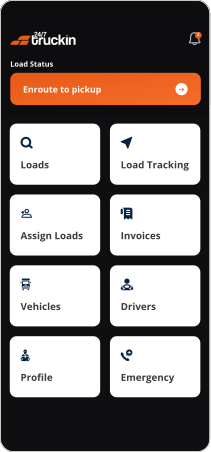
24/7 Truckin’ offers an all-in-one load board platform designed to streamline logistics and enhance efficiency.
With features like real-time tracking, load management, and contract handling, 24/7 Truckin’ helps owner-operators, brokers, and drivers find the best loads and rates.
By providing access to a range of tools, it allows users to manage their shipments, improve rate negotiation, and ultimately boost their productivity and profitability.
If you’re ready to optimize your trucking operations and secure better rates, call us or book a demo to discover how our platform can help you stay ahead in the trucking industry.