Why Real-Time Load Tracking Matters for Brokers
Freight operations move quickly, and brokers are expected to stay informed at every stage of a shipment. Customers want immediate updates, carriers need clear communication, and delays must be handled before they become larger operational problems.
In this environment, relying on phone calls, spreadsheets, and manual updates is no longer enough.
Real-time load tracking has become one of the most important tools in modern freight management because it gives brokers immediate visibility into where shipments are, how routes are progressing, and whether deliveries are staying on schedule.
Instead of spending hours chasing updates from drivers and dispatchers, brokers can monitor loads directly through connected systems that provide live shipment data.
As freight volumes continue to increase, visibility has become directly connected to customer satisfaction, operational efficiency, and long-term business growth.
Brokers who can provide accurate updates and respond quickly to changing conditions are in a stronger position to build trust with both carriers and shippers.
________________________________________________________________________________________________
TL;DR:
- Real-time load tracking gives brokers live visibility into shipment movement, delivery timelines, and route progress without relying on constant check calls.
- Better freight visibility improves communication between brokers, carriers, and shippers, helping reduce confusion and operational delays.
- Live shipment updates allow brokers to respond faster to freight delays, provide accurate ETAs, and improve customer trust.
- Modern load tracking software reduces manual workload, simplifies dispatch management, and helps brokers scale operations more efficiently.
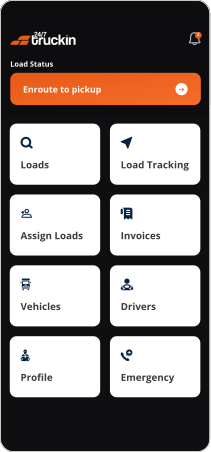
- Platforms like 24/7 Truckin help brokers manage freight with stronger visibility, centralized communication, and smarter load management tools.
________________________________________________________________________________________________
What Is Real-Time Load Tracking?
Real-time load tracking is the process of monitoring freight shipments live while they are in transit.
Using GPS tracking, mobile integrations, and logistics tracking systems, brokers can view shipment movement, estimated arrival times, and route progress without waiting for manual check-ins from drivers.
Traditional freight tracking often depends on check calls and text updates between brokers and carriers. While this method may still work on a small scale, it becomes difficult to manage when brokers are handling multiple shipments across different regions simultaneously.
Modern load tracking software automates much of this process by providing centralized shipment visibility in one platform. Brokers can quickly identify where a truck is located, whether a shipment is delayed, and how delivery timelines are progressing.
This level of truck tracking helps reduce communication gaps and allows brokers to operate with more confidence throughout the shipment lifecycle.

Why Visibility Has Become Critical in Modern Freight Operations
The freight industry has changed significantly over the last few years. Shippers now expect fast communication, accurate delivery updates, and complete transparency throughout the transportation process.
Waiting several hours for shipment updates is no longer acceptable in many logistics operations.
Real-time visibility allows brokers to provide customers with accurate shipment information at any time. Instead of reacting to problems after they happen, brokers can identify potential delays early and communicate proactively with all parties involved.
Poor supply chain visibility creates operational confusion. Drivers may experience delays without brokers knowing immediately, customers become frustrated when updates are unavailable, and dispatch teams spend valuable time trying to collect information manually.
When freight visibility improves, communication becomes smoother between brokers, carriers, and customers. Everyone involved has access to clearer shipment data, which reduces misunderstandings and improves operational coordination.
[Brokers who provide faster updates often build stronger long-term shipper relationships.]
Visibility also plays an important role in protecting customer trust. A delayed shipment may still be manageable if the customer receives accurate information early. However, lack of communication usually creates bigger problems than the delay itself.

How Real-Time Load Tracking Reduces Operational Stress
Managing freight manually creates unnecessary pressure for brokers and dispatch teams. Constant check calls, repeated follow-ups, and disconnected communication channels slow down daily operations and reduce productivity.
Brokers often manage multiple shipments simultaneously across different carriers and delivery schedules. Without centralized tracking, keeping up with every load becomes difficult and time-consuming.
Real-time load tracking reduces this operational stress by placing shipment data into one organized system. Brokers can monitor load progress, review shipment ETAs, and respond to issues faster without relying entirely on manual communication.
Dispatch management also becomes more efficient when live shipment updates are available. Teams spend less time requesting information and more time focusing on operational decision-making.
Carrier communication improves because everyone works with the same shipment data. Drivers no longer need to answer frequent location calls, and brokers can provide updates to customers more confidently.
A modern load management platform creates better workflow control by simplifying visibility across all active shipments. This allows freight operations to scale more efficiently without creating communication bottlenecks.
The Impact on Delivery Performance and Customer Experience
Customers expect accurate information throughout the shipping process. Whether a shipment arrives early or experiences delays, communication quality strongly affects the customer experience.
Real-time tracking helps brokers improve delivery performance by identifying problems before they escalate. If a shipment is delayed due to traffic, weather, or route disruptions, brokers can notify customers immediately and provide updated shipment ETA information.
This level of transparency improves trust because customers are not left wondering where their freight is located or why timelines have changed.
Freight delays are sometimes unavoidable in logistics operations, but poor communication makes these situations worse. When brokers provide proactive delivery updates, customers are more likely to remain confident in the partnership.
[Customers are more understanding about delays when they receive updates before problems escalate.]
Route optimization also becomes easier with live shipment visibility. Brokers and dispatchers can identify inefficient routes, monitor transportation performance, and improve operational planning over time.
Better customer communication ultimately strengthens relationships and helps brokers maintain a professional reputation in a highly competitive market.

Why Brokers Need Technology Instead of Manual Tracking
Manual freight tracking methods may work temporarily, but they become difficult to maintain as operations grow. Spreadsheets, phone calls, emails, and disconnected systems create inefficiencies that slow down freight operations and increase the risk of communication errors.
Modern logistics technology allows brokers to centralize shipment tracking, communication, documentation, and operational updates within one connected platform.
Instead of switching between multiple tools, brokers can manage shipment tracking and freight visibility more efficiently from a single dashboard.
Load tracking software also improves scalability. As brokerages grow and manage more freight volume, automated visibility systems help maintain operational control without dramatically increasing manual workload.
Shipment tracking technology is no longer viewed as an optional convenience. It has become an operational requirement for brokers who want to remain competitive in modern freight markets.
Companies that continue relying entirely on manual communication often struggle with delayed updates, inconsistent tracking, and slower response times.
Digital transportation management systems help brokers operate faster, communicate more effectively, and maintain stronger visibility across active shipments.
How Better Tracking Improves Broker Reputation
Freight brokerage is built on trust, reliability, and communication. Brokers who consistently provide accurate updates and dependable service are more likely to retain customers and generate repeat business.
Real-time load tracking helps brokers strengthen their reputation because it improves transparency throughout the shipping process. Customers value brokers who stay informed and communicate clearly during both normal operations and unexpected delays.
Strong carrier communication also improves professional relationships across the freight network. Drivers and dispatch teams benefit from fewer unnecessary interruptions, while shippers appreciate faster updates and better visibility.
[In freight brokerage, communication speed often matters just as much as pricing.]
Operational consistency becomes a competitive advantage over time. Brokers who manage shipments efficiently and maintain reliable communication are often viewed as stronger long-term partners.
As competition increases across the logistics industry, service quality and visibility play a larger role in customer retention. Real-time tracking helps brokers stand out by improving reliability, responsiveness, and overall shipment management.

Smarter Visibility Creates Stronger Freight Operations
Modern freight operations depend on speed, visibility, and communication. Brokers who rely entirely on manual tracking methods often face delays, operational stress, and communication gaps that reduce efficiency over time.
Real-time load tracking helps simplify freight management by providing live shipment visibility, faster updates, and better coordination between brokers, carriers, and customers. It improves operational control while reducing the pressure created by constant manual follow-ups.
As logistics operations continue to evolve, visibility technology will remain essential for brokers who want to improve customer experience, manage freight more efficiently, and scale their operations successfully.
24/7 Truckin helps brokers and carriers simplify freight operations through smarter load management, real-time visibility, shipment tracking, and streamlined communication tools designed for modern transportation workflows. Get in touch with us today.