AI in freight
Artificial intelligence is becoming one of the most discussed developments in the transportation industry.
While freight brokerage has traditionally relied on relationships, negotiation skills, market knowledge, and operational experience, technology is beginning to play a larger role in how brokers manage daily operations.
The growing use of AI in freight brokerage is not about replacing brokers. Instead, it is about helping brokerage teams process information faster, improve decision-making, reduce manual work, and respond more effectively to changing market conditions.
As freight volumes continue to increase and customer expectations evolve, many brokerages are looking for ways to improve efficiency without sacrificing service quality.
AI-powered tools are providing new opportunities to streamline operations while allowing brokers to focus on the activities that create the most value.
For companies operating in a competitive freight market, understanding how AI is changing freight brokerage operations is becoming increasingly important.
________________________________________________________________________________________________
TL;DR:
- AI is helping freight brokers automate repetitive administrative tasks.
- Smart load matching tools can connect loads and carriers faster than manual processes.
- Predictive analytics helps brokers make better pricing and capacity decisions.
- Real-time visibility tools improve shipment tracking and customer communication.
- Brokerages that combine experienced professionals with technology may gain a stronger competitive advantage.
________________________________________________________________________________________________
Faster Load Matching Through Intelligent Automation
Finding the right carrier for the right load has always been one of the most important responsibilities of a freight broker. However, manually reviewing carrier networks, making calls, sending emails, and negotiating availability can consume significant time every day.
Modern AI-powered freight platforms are changing this process. Instead of relying entirely on manual searches, brokers can use intelligent systems that analyze large amounts of data in seconds.
These systems can evaluate factors such as:
- Carrier availability
- Preferred lanes
- Equipment requirements
- Historical performance
- Pricing trends
- Delivery reliability
- Geographic coverage
Based on this information, AI can recommend carriers that are most likely to meet shipment requirements.
[Smart load matching reduces manual effort and helps brokers secure capacity more quickly.]
This does not eliminate the broker’s role. Human judgment is still required when evaluating service quality, customer expectations, and relationship considerations. However, AI significantly reduces the amount of time needed to identify potential transportation partners.
As freight volumes increase, faster load matching can become a major operational advantage.
Improving Freight Pricing Decisions
Freight pricing remains one of the most complex aspects of brokerage operations. Rates are constantly influenced by fuel costs, market demand, seasonal fluctuations, weather conditions, economic activity, and available capacity.
Many brokers rely on experience and historical knowledge when generating quotes. While experience remains valuable, AI can provide additional insights that improve pricing accuracy.
Predictive analytics tools analyze large datasets from previous shipments and current market conditions. These systems identify patterns that may not be immediately visible through manual analysis.
This allows brokers to:
- Estimate future rate movements
- Respond faster to quote requests
- Protect profit margins
- Improve pricing consistency
- Reduce uncertainty during volatile market conditions
For customers, more accurate pricing often means faster responses and better planning. For brokerages, it can support healthier margins and more informed decision-making.
As freight markets continue to change rapidly, predictive analytics is becoming an increasingly valuable tool for transportation professionals.
Enhancing Shipment Visibility and Tracking
Shippers today expect greater transparency throughout the transportation process. Customers want to know where their freight is, when it will arrive, and whether any disruptions are expected.
Traditional tracking methods often require brokers to contact carriers directly or manually collect shipment updates.
AI-enabled logistics software is helping change that process.
By integrating GPS data, telematics systems, transportation management platforms, and carrier information, AI tools can provide real-time shipment visibility.
More importantly, these systems can identify potential issues before they become serious problems.
For example, AI may detect:
- Traffic-related delays
- Weather disruptions
- Route deviations
- Delivery risks
- Capacity constraints
[Early visibility allows brokers to solve problems before customers experience them.]
This proactive approach improves customer service while helping brokerage teams manage exceptions more effectively.
Real-time visibility has become one of the most important competitive differentiators in modern freight operations.
Automating Repetitive Administrative Work
A significant portion of a broker’s day is often spent performing administrative tasks rather than revenue-generating activities.
Common examples include:
- Data entry
- Status updates
- Appointment scheduling
- Document management
- Carrier onboarding
- Shipment notifications
- Compliance tracking
While these activities are important, they can consume valuable time that could otherwise be spent building relationships or securing business opportunities.
AI-powered automation tools help reduce this workload.
Documents can be processed automatically. Status updates can be generated in real time. Routine customer communications can be triggered without requiring manual intervention.
The result is a more efficient workflow that allows brokerage teams to focus on strategic activities.
[Automation works best when it supports brokers rather than replacing them.]
The most successful implementations typically use AI to handle repetitive processes while allowing employees to focus on decision-making and customer service.
Strengthening Carrier and Customer Relationships
One common misconception about artificial intelligence is that it reduces the importance of human relationships. In freight brokerage, relationships remain one of the most valuable assets a company can have.
Technology cannot replace trust, communication, and industry expertise.
However, AI can help brokers strengthen these relationships by providing better information and reducing operational distractions.
For example, AI tools can help identify:
- High-performing carriers
- Preferred transportation partners
- Reliable shipping lanes
- Customer service trends
- Performance improvement opportunities
This information helps brokers make smarter decisions while maintaining strong connections with both carriers and customers.
Instead of spending hours managing spreadsheets and administrative tasks, brokers can devote more attention to relationship building and business development.
That combination of technology and personal service is often where long-term competitive advantages are created.
Using AI to Improve Capacity Planning
Capacity management is another area where artificial intelligence is beginning to make a meaningful impact.
Freight demand can fluctuate quickly, making it difficult for brokers to predict future capacity needs.
AI systems can analyze:
- Historical shipping patterns
- Seasonal demand trends
- Regional freight activity
- Carrier availability
- Market conditions
Using this information, brokers can anticipate capacity challenges before they occur.
This allows teams to secure carrier relationships earlier, prepare customers for potential market changes, and reduce disruptions during peak shipping periods.
Better forecasting often leads to better operational planning, improved customer satisfaction, and more consistent service levels.
As data becomes more available throughout the transportation industry, capacity forecasting will likely become increasingly accurate.
Challenges Brokerages Must Consider Before Adopting AI
While the benefits are significant, adopting AI is not always straightforward.
Brokerages must carefully evaluate several factors before implementing new technology.
Common challenges include:
- Initial technology costs
- Employee training requirements
- Data quality issues
- Software integration concerns
- Change management challenges
Organizations that rush implementation without proper planning may struggle to achieve meaningful results.
Successful adoption typically requires clear objectives, quality data, employee support, and realistic expectations.
AI should be viewed as a business tool that enhances operations rather than a solution that automatically fixes every problem.
Companies that take a practical and strategic approach are often more likely to see long-term benefits.
What the Future of Freight Brokerage Could Look Like
Artificial intelligence will likely continue expanding across the transportation industry over the next several years.
Future developments may include:
- More advanced predictive analytics
- Improved route optimization
- Automated carrier recommendations
- Enhanced fraud detection
- Smarter pricing models
- Improved demand forecasting
- Greater supply chain visibility
While these advancements may improve efficiency, experienced freight brokers will remain essential.
Customers will continue to value industry knowledge, problem-solving abilities, and trusted business relationships.
[The future of freight brokerage is likely a combination of skilled professionals and intelligent technology working together.]
Brokerages that successfully blend technology with human expertise may be better positioned to adapt to future market changes.

How 24/7 Truckin Helps Brokers Stay Competitive
As the transportation industry continues adopting new technologies, having the right operational tools becomes increasingly important.
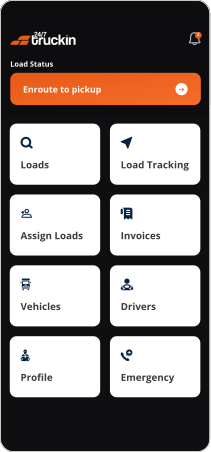
24/7 Truckin helps brokers manage freight operations through a centralized platform designed to support load management, contract handling, real-time shipment visibility, communication, and workflow organization.
Rather than juggling multiple systems, brokers can streamline daily operations while maintaining greater control over freight activity.
As AI and logistics automation continue shaping the future of transportation, having access to efficient digital tools can help brokerage teams improve productivity, respond faster to customers, and remain competitive in a rapidly evolving freight market.
The companies that embrace innovation while maintaining strong relationships will be best positioned for long-term success, and 24/7 Truckin is committed to helping brokers navigate that future with confidence.