Key Owner Operator Challenges in 2026
Owner-operators are entering 2026 with more pressure than ever before. Rising costs, changing freight demand, and stricter compliance requirements are making it harder to maintain stable income.
Many independent truck drivers are finding that what worked a few years ago is no longer enough to stay profitable.
Understanding owner operator challenges in 2026 is critical for making better business decisions. From rising fuel costs in trucking to load availability problems, each factor directly impacts daily operations and long-term sustainability. The trucking industry continues to shift, and those who adapt quickly are more likely to stay ahead.
This guide breaks down the most important challenges owner-operators are facing today and explains how to handle them with practical strategies that support better planning and stronger financial control.

________________________________________________________________________________________________
TL;DR:
- Owner-operators in 2026 are facing rising fuel costs, unstable freight rates, and increasing operational expenses that directly impact profit margins
- Fuel efficiency and route planning are critical to controlling costs and improving cost per mile in trucking
- Freight rate fluctuations and load availability problems make it important to evaluate every load before accepting it
- Maintenance, compliance, and cash flow management require consistent planning to avoid disruptions and financial stress
- Using smarter dispatch strategies and tools like 24/7 Truckin can help improve load selection, reduce empty miles, and maintain steady earnings
________________________________________________________________________________________________
Rising Fuel Costs Are Shrinking Profit Margins
Fuel remains the largest expense in owner operator trucking, and rising fuel costs in trucking continue to put pressure on earnings. Even small increases in fuel prices can significantly affect the cost per mile in trucking, making it harder to maintain consistent profit margins.
Fluctuating fuel prices also make it difficult to plan ahead. Routes that were profitable a few months ago may no longer cover operating costs today. This unpredictability forces drivers to constantly adjust their decisions, often without clear visibility into future costs.
[Fuel costs can quickly reduce profit margins if not managed properly.]
To manage the fuel price impact on trucking operations, owner-operators need to focus on efficiency. Reducing idle time is one of the most immediate ways to save fuel.
Planning routes carefully can also help avoid unnecessary miles, especially in areas with heavy traffic or long detours.
Tracking fuel usage over time gives better insight into spending patterns. When drivers understand where fuel is being consumed the most, they can make smarter adjustments that improve overall cost control.

Freight Rate Fluctuations Make Income Unstable
Freight rate fluctuations remain one of the most unpredictable trucking industry challenges. Changes in freight demand, combined with high competition, have made it harder for independent truck drivers to secure consistent and profitable loads.
In many cases, owner-operators depend on the spot market, where rates can shift quickly based on supply and demand. During slower periods, load availability problems become more frequent, and rates often drop below sustainable levels.
[Not every load is worth taking if it does not cover total operating costs.]
To handle this, drivers need to evaluate every load carefully. Looking at the total cost per mile in trucking, including fuel, time, and maintenance, helps determine whether a load is worth accepting. Accepting low-paying loads just to stay busy can lead to long-term losses.
Planning around changes in freight demand can also improve decision-making. Understanding when demand is higher allows drivers to position themselves in better locations and secure higher-paying opportunities.
Maintenance and Repair Costs Continue to Rise
Truck maintenance costs are increasing due to higher prices for parts and labor. For many owner-operators, even routine maintenance can become expensive, especially when combined with unexpected repairs.
Breakdowns not only lead to repair costs but also result in downtime, which directly affects income. Missing loads due to vehicle issues creates a double impact, increasing expenses while reducing earnings at the same time.
[Unexpected breakdowns can quickly disrupt operations and reduce overall earnings.]
Preventive maintenance is one of the most effective ways to reduce long-term costs. Regular inspections help identify small issues before they turn into major problems. Staying consistent with servicing schedules ensures that the truck remains reliable and efficient.
Setting aside a portion of earnings specifically for maintenance also helps manage the financial side of repairs. This approach allows owner-operators to handle issues without disrupting their overall cash flow.

Compliance and Regulations Are Becoming More Demanding
Compliance continues to be a growing concern for independent truck drivers. ELD regulations in 2026 require accurate tracking of driving hours and detailed recordkeeping.
Trucking compliance issues can lead to penalties, delays, and operational disruptions if not handled properly.
Beyond ELD requirements, drivers must also manage documentation, inspections, and regulatory updates. These responsibilities add complexity to daily operations and require consistent attention.
[Staying compliant is not optional, but it should not slow down your operations.]
To stay compliant without losing efficiency, owner-operators need to stay organized. Keeping records updated and understanding current requirements reduces the risk of violations. Simple tracking systems and consistent routines can make compliance easier to manage.
When compliance is handled properly, it becomes part of the workflow rather than a disruption.
Cash Flow Challenges Are Affecting Stability
Cash flow remains one of the most critical trucking business challenges. Many owner-operators face delayed payments while still needing to cover immediate expenses such as fuel, truck insurance costs, and maintenance.
This imbalance creates pressure on owner operator profit margins and makes it difficult to maintain financial stability. Even when business is steady, inconsistent payment cycles can create gaps that affect daily operations.
[Strong cash flow management is essential for long-term sustainability in trucking.]
Managing trucking cash flow issues requires better planning and awareness. Tracking expenses closely helps identify where money is being spent and where adjustments can be made. Setting aside funds for slower periods also helps maintain stability during times of lower income.
Financial control is not just about earning more. It is about managing existing income more effectively to avoid unnecessary stress.

Load Availability and Dispatch Planning Issues
Load availability problems continue to affect many owner-operators, especially in competitive markets. Finding consistent and profitable loads requires time, effort, and careful planning.
Relying only on load boards can limit opportunities and lead to inconsistent work. Without proper dispatch and load planning, drivers may spend more time searching for loads than actually hauling them.
To improve this, owner-operators need to take a more strategic approach. Planning routes in advance, reducing empty miles, and selecting loads based on overall efficiency can improve performance.
Better dispatch decisions help create a more stable workflow. Instead of reacting to available loads, drivers who plan ahead are more likely to secure consistent and profitable opportunities.
How Owner-Operators Can Stay Profitable in 2026
The trucking market conditions in 2026 present several challenges, but they also create opportunities for those who are prepared.
Owner-operators who understand how to manage rising costs, changing freight demand, and operational pressures can still maintain strong performance.
Addressing owner operator challenges in 2026 requires a combination of awareness, planning, and consistent decision-making. Each part of the business, from fuel management to load selection, plays a role in long-term success.
Improving efficiency, controlling expenses, and adapting to market changes are key to staying competitive. Independent truck drivers who focus on these areas are better positioned to handle uncertainty and maintain steady growth.
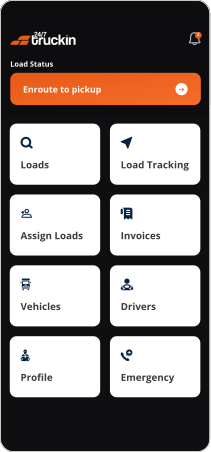
For those looking to improve dispatch and load planning, 24/7 Truckin provides tools that help owner-operators find better load opportunities, reduce empty miles, and manage routes more efficiently, making it easier to maintain consistent earnings in a changing market.
Get in touch with us to learn more.