The freight market update USA carriers in 2026 reflects a period of stabilization after years of volatility. The U.S. trucking market continues to adjust following freight rate swings, capacity corrections, and regulatory tightening.
While demand patterns are stabilizing, operational efficiency, compliance costs, and digital adoption remain central to carrier performance.
This freight market update USA outlines what is currently shaping the American trucking landscape and what carriers, brokers, and owner-operators should be monitoring closely.
Freight Rates Are Stabilizing, But Margins Remain Tight
A key takeaway from this freight market update USA is that spot market rates are gradually stabilizing. Contract freight across major U.S. lanes is showing improved predictability compared to previous peak-volatility cycles.
However, stabilization does not automatically restore profitability.
Key factors impacting margins across the U.S. freight market include:
- Higher insurance premiums
- Maintenance and equipment costs
- Diesel fuel price fluctuations
- Increased compliance requirements
- Equipment financing pressure
According to industry data referenced by the American Trucking Associations, operational cost pressure remains one of the biggest concerns for small and mid-sized carriers in 2026.
[Freight rate stabilization does not equal margin recovery. Carriers must focus on cost control, cost per mile tracking, and operational efficiency.]
Regulatory Pressure Is Increasing Across the U.S. Freight Market
Compliance remains a defining factor in every freight market update USA analysis.
The Federal Motor Carrier Safety Administration continues tightening enforcement around:
- Safety accountability scores
- Electronic logging device compliance
- Carrier insurance requirements
- Broker transparency enforcement
- Authority verification standards
Discussions around freight fraud prevention and double brokering are gaining stronger legislative focus.
Regulatory enforcement in 2026 is proactive rather than reactive.
Carriers without structured digital recordkeeping, ELD data accuracy, and real-time load tracking systems face higher audit exposure and financial penalties.
[In the current freight market update USA cycle, compliance readiness is a competitive advantage, not just a requirement.]
Freight Fraud and Double Brokering Continue to Impact the USA Freight Market
Another major element in this freight market update USA is the persistent issue of freight fraud.
Fraud risks in the American trucking industry include:
- Double brokering schemes
- Carrier identity theft
- Load hostage incidents
- Fraudulent MC authority listings
- Digital impersonation of brokers
Industry stakeholders are pushing for stronger verification protocols and secure load board environments.
The U.S. Department of Transportation has increased collaboration with enforcement agencies to strengthen fraud detection efforts.
Manual verification through phone calls and email chains is no longer sufficient in today’s digital freight ecosystem.
Secure digital load management systems with structured verification workflows are becoming standard operating requirements.
Using a structured load board system with built-in verification tools reduces exposure to double brokering and identity fraud risks. Book a demo now through here.
[Freight fraud prevention in the USA now depends on digital verification systems, structured documentation, and centralized dispatch control.]
Insurance Costs Are Reshaping Carrier Strategy in the USA
Insurance remains one of the fastest-growing expense categories in the U.S. trucking industry.
This freight market update USA shows that insurance underwriting has tightened significantly due to:
- Nuclear verdict trends
- Higher litigation settlements
- Increased underwriting scrutiny
- Minimum liability coverage debates
Small carriers and owner-operators are particularly affected due to limited negotiating leverage.
This is driving some operators to:
- Downsize fleets
- Exit the market
- Merge operations
- Invest in telematics and safety technology
Insurance cost management is now directly linked to measurable safety metrics, accident history, and operational transparency.
As a result, carriers leveraging real-time tracking, compliance reporting systems, and structured fleet monitoring are often positioned more favorably during underwriting reviews.
[Insurance premiums in the USA freight market increasingly reflect safety data, telematics integration, and compliance documentation quality.]
Digital Transformation Is Defining the Competitive Edge
Digital adoption continues to shape every freight market update USA discussion.
Carriers and brokers across the United States are investing in:
- Digital dispatch software
- Real-time freight tracking
- Automated contract workflows
- Integrated load board platforms
- AI-assisted route optimization
- Centralized carrier management systems
The objective is not workforce replacement.
The objective is operational efficiency and load cycle acceleration.
Companies that centralize freight visibility, rate confirmation workflows, compliance documentation, and communication into unified digital systems are increasing load speed, reducing administrative friction, and protecting margins.
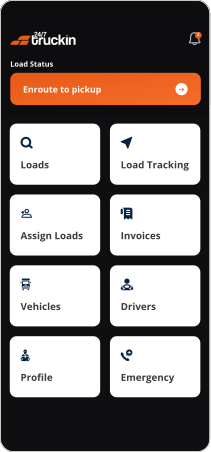
Platforms like 24/7 Truckin are designed to centralize load management, digital contracts, and real-time tracking into one operational system, helping brokers and carriers reduce manual coordination gaps.
In 2026, digital freight management maturity is directly tied to profitability and survival.
[Digital workflow integration is now a structural requirement in the freight market update USA environment, not an experimental upgrade.]
Bankruptcy Trends and Market Consolidation
The freight market update USA narrative also includes selective carrier bankruptcies and ongoing consolidation.
Smaller fleets with high debt loads, poor cost control, and limited digital infrastructure remain vulnerable.
Meanwhile, financially disciplined carriers are acquiring equipment and capacity at discounted valuations.
As a result, the market reflects restructuring rather than systemic collapse.
The U.S. trucking industry is stabilizing around operators who prioritize:
- Cost per mile analysis
- Contract optimization
- Digital dispatch control
- Compliance accuracy
- Freight visibility
What This Freight Market Update USA Means for Brokers and Owner-Operators
For brokers:
- Structured carrier verification reduces fraud exposure
- Digital contracts protect margins
- Real-time freight tracking increases shipper trust
Owner-operators:
- Cost tracking per mile is critical
- Insurance optimization affects survival
- Strategic lane selection improves revenue stability
Mid-sized fleets:
- Workflow automation improves profit margins
- Centralized dispatch reduces coordination delays
- Compliance systems strengthen long-term sustainability
The freight market update USA clearly shows that operational efficiency now defines competitiveness in American trucking.
Strategic Outlook for the Rest of 2026
The freight market update USA outlook for the remainder of 2026 includes:
- Gradual freight rate normalization
- Continued cost pressure
- Heightened regulatory oversight
- Increased digital system adoption
- Persistent fraud mitigation efforts
Carriers and brokers investing in structured operational systems, secure load workflows, and compliance-driven infrastructure will outperform fragmented operators.
Efficiency is no longer optional.
It is structural.
For brokers and carriers looking to strengthen operational control in this freight market update, USA cycle, adopting an integrated digital freight platform can significantly reduce friction and improve load visibility.
________________________________________________________________________________________________
________________________________________________________________________________________________
Frequently Asked Questions
1. What is the current freight market update USA for 2026?
The current freight market update USA indicates gradual stabilization in spot and contract freight rates after extended volatility. However, despite this improvement, carriers continue facing pressure from rising insurance costs, regulatory enforcement, and operational expenses.
At the same time, while freight demand is normalizing across major U.S. lanes, profitability depends heavily on cost control, compliance readiness, and digital workflow efficiency. Therefore, operational discipline remains critical in the current market environment.
2. Are freight rates expected to increase in the USA in 2026?
Freight rates in the USA are showing moderate recovery trends in 2026, particularly in contract freight markets. Meanwhile, spot rates remain sensitive to fuel prices, capacity availability, and seasonal demand shifts. As a result, analysts expect incremental improvement rather than sharp increases, with outcomes varying depending on freight volume and lane density across different regions.
3. How are regulations affecting the USA freight market in 2026?
Regulatory enforcement from agencies such as the Federal Motor Carrier Safety Administration is increasing compliance pressure across the U.S. trucking industry. As a result, carriers must maintain accurate ELD records, insurance documentation, and verification workflows to reduce audit risk.
In this environment, within the current freight market update USA cycle, compliance readiness directly impacts operational stability and long-term competitiveness.