How the History of Trucking Shaped Modern Freight Operations
The history of trucking reflects constant adaptation. The industry did not grow because conditions were easy. It grew because businesses demanded faster delivery, broader reach, and tighter control over freight movement.
Every major shift forced carriers to operate smarter, reduce inefficiencies, and respond to rising expectations.
Trucking has never remained static. As road infrastructure improved, fleets expanded accordingly. Increased competition then pushed companies to refine their operations, while regulatory changes required carriers to adjust their systems and processes to remain compliant and competitive. Each milestone strengthened the structure of the industry.
Today, modern trucking technology defines competitiveness. Carriers rely on structured platforms, real-time updates, automation tools, and digital freight management to protect margins. Freight moves faster than ever, but expectations also move faster.
Shippers expect visibility. Drivers expect consistent loads. Operators expect stability.
“To understand why integrated freight platforms matter now, we must examine how the trucking industry evolution unfolded.”
This is not just a story about trucks. It is a story about control, efficiency, discipline, and long-term survival.
________________________________________________________________________________________________
TL;DR:
- The trucking industry evolved from manual load boards and paper logs to technology-driven operations powered by digital freight management systems.
- Traditional trucking struggled with fragmented communication, slow paperwork, limited load visibility, and inefficient dispatch coordination.
- Modern freight technology centralizes load matching, routing, tracking, contracts, and documentation into a single connected workflow.
- Real-time data and operational visibility now allow brokers, carriers, and owner-operators to make faster, smarter decisions.
- 24/7 Truckin supports this evolution by offering a unified platform that simplifies dispatch, improves communication, and strengthens freight efficiency.
________________________________________________________________________________________________
The Early Foundations of the Trucking Industry
Gasoline Engines Replace Horse Transport
The history of trucking began in the early 1900s when gasoline-powered vehicles replaced horse-drawn wagons for short-distance hauling. Before trucks, railroads dominated long-distance freight while horses handled local delivery.
This system worked, but it lacked speed and flexibility.
Early trucks allowed businesses to move goods directly from warehouse to store without relying on rail stations. That flexibility started the trucking industry evolution. Companies gained more control over timing and routes. They could respond to local demand faster.
However, early trucks faced major limitations. Roads were rough and often unpaved. Vehicles broke down frequently. Fuel efficiency was low. Maintenance required constant attention. Many businesses hesitated to invest in fleets because reliability remained uncertain.
Despite these challenges, economic demand pushed innovation forward. Manufacturers improved engine design and reinforced chassis strength.
Businesses saw opportunity. The ability to deliver directly to customers offered a competitive edge that rail transport could not match.
Even in its earliest stage, the history of trucking showed one clear principle: control over delivery equals control over business growth.
Diesel Engine Development and Commercial Expansion
Diesel engine development in the 1920s and 1930s strengthened commercial trucking dramatically. These engines provided greater torque, better fuel efficiency, and longer engine life compared to gasoline engines.
With stronger engines, carriers hauled heavier loads and expanded routes. Fleets grew larger. Distribution networks expanded beyond city boundaries.
Businesses began building regional freight networks. Instead of shipping through rail hubs and transferring cargo multiple times, trucks handled larger portions of delivery routes.
This stage of the history of trucking focused on mechanical improvement. Carriers invested in stronger equipment to increase productivity. Reliability improved. Profit margins improved.
The foundation for modern freight logistics systems began here. Trucks were no longer secondary transport. They became essential infrastructure for commerce.
The Interstate Highway System and the National Freight Boom
The 1956 Federal Highway Act
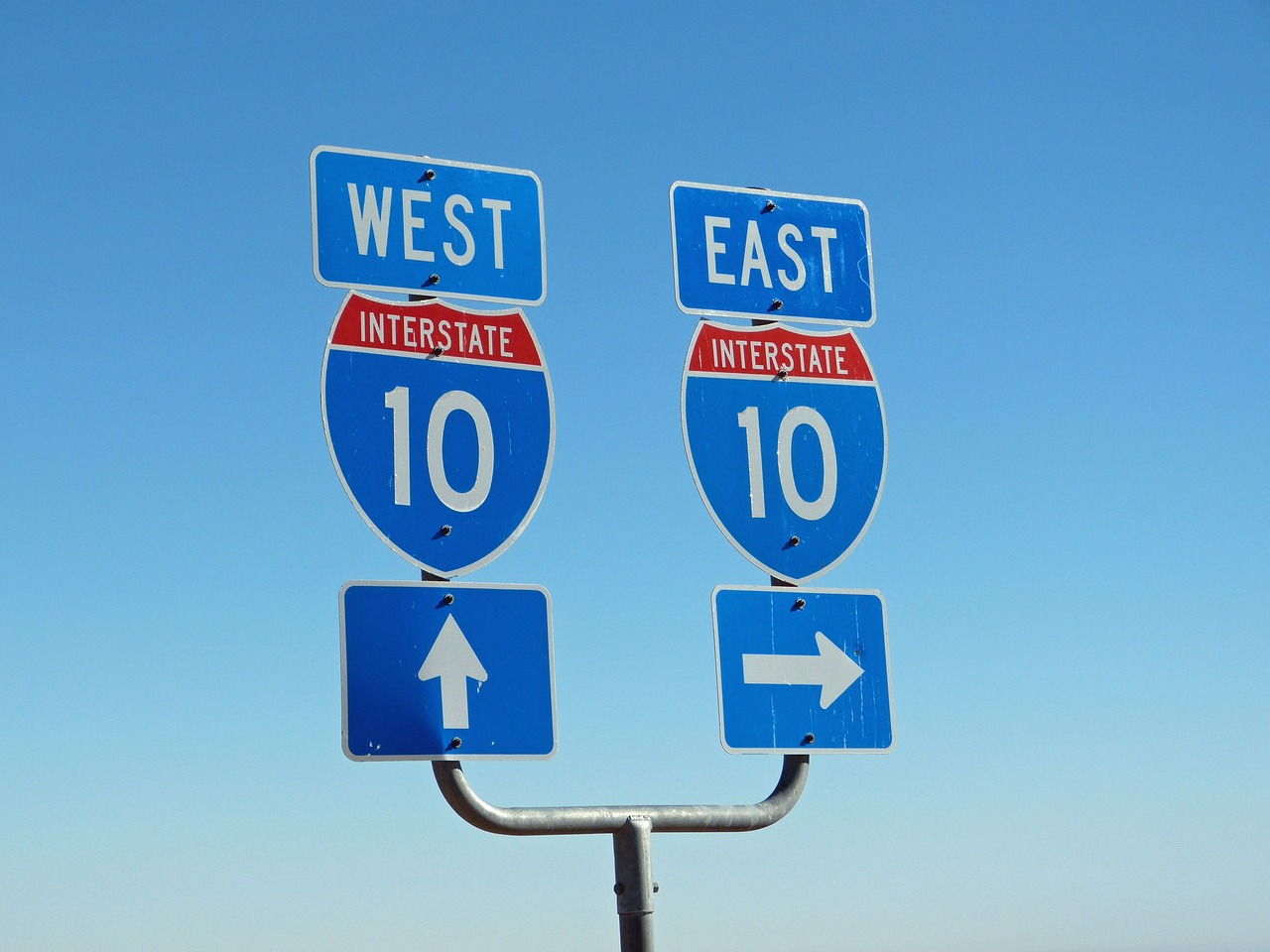
The interstate highway system marked one of the most important turning points in the history of trucking. In 1956, the Federal Highway Act launched a nationwide road network connecting major cities and industrial centers.
Before this system, long-distance routes often involved slow travel on local roads. The interstate network created consistent, high-speed corridors.
This shift reduced transit time dramatically. Drivers covered longer distances in fewer hours. Delivery schedules became more predictable. Carriers expanded long-haul trucking operations across state lines with confidence.
“The interstate highway system did more than improve travel speed. It transformed freight into a national system rather than a regional one.”
How Infrastructure Accelerated Transportation Industry Growth
Transportation industry growth surged because infrastructure removed limitations. Retail chains expanded nationally. Manufacturers scaled production across multiple states. Distribution centers emerged near major highway exits.
Carriers increased fleet sizes to match demand. Fuel stations, repair facilities, and freight terminals developed along major routes. Entire economic ecosystems grew around trucking corridors.
The history of trucking proves that infrastructure determines scale. When roads improved, trucking efficiency improved automatically. Carriers wasted less time navigating poor road conditions. Maintenance costs decreased. Reliability improved.
Businesses trusted trucking as the backbone of supply chains.
This stage solidified trucking operations as the dominant method of freight movement across the country.
Deregulation and the Era of Competition
The Freight Deregulation Act and Pricing Freedom
The freight deregulation act of 1980 changed the industry structure overnight. Before deregulation, government agencies controlled routes and pricing. Carriers operated under fixed guidelines.
After deregulation, carriers gained pricing freedom. They chose lanes based on profitability. They negotiated directly with shippers.
This shift increased competition quickly. Smaller carriers entered the market. Larger carriers adjusted operations to defend their positions.
The freight deregulation act rewarded efficiency. Companies that controlled costs survived. Companies that relied on outdated practices struggled.
Margin Pressure and Trucking Efficiency
Competition exposed weaknesses in operations. Carriers faced pressure to lower rates while maintaining service quality. This environment forced serious trucking business modernization.
Companies began analyzing fuel consumption, maintenance costs, and route productivity more carefully. They reduced empty miles. They improved load planning.
Trucking efficiency became the foundation of survival. Carriers learned that operational discipline protects margins in competitive markets.
The history of trucking shows that competition drives innovation. When pricing becomes flexible, structure becomes essential.
This period pushed the industry toward smarter operational systems long before digital platforms fully matured.
Compliance, Automation, and the Rise of Digital Systems
The Electronic Logging Device Mandate
Regulation introduced another structural shift. The electronic logging device mandate required carriers to track driver hours digitally to improve compliance with safety standards.
Many operators resisted initially. They worried about cost and oversight. However, digital logs increased accountability and reduced paperwork errors.
The electronic logging device mandate accelerated digital adoption across trucking operations. Carriers began integrating compliance systems with dispatch scheduling and reporting tools.
Structured oversight replaced guesswork.
Freight Tracking Systems Replace Paper Logs
Freight tracking systems improved communication between carriers and shippers. GPS-based updates replaced manual phone check-ins.
Shippers demanded freight visibility. They expected real-time updates. Carriers who provided accurate tracking gained trust and repeat business.
“Freight tracking systems improved internal planning as well. Dispatchers monitored delays quickly. Managers identified inefficiencies earlier.”
Dispatch Automation and Operational Control
Dispatch automation reduced administrative strain. Instead of manually matching loads to drivers, carriers gradually shifted to digital systems, thereby coordinating schedules more efficiently.
Digital freight management emerged as a structured solution for modern challenges. Carriers integrated compliance, tracking, documentation, and communication within centralized systems.
This stage of trucking industry evolution shifted focus from mechanical performance to information control.
Carriers who embraced automation processed more loads with fewer mistakes. They reduced delays and improved response time.
Modern Trucking Technology and Real-Time Freight Visibility
Load Board Platforms and Centralized Access
Load board platforms transformed how carriers secure freight. Instead of relying on scattered broker calls, companies access structured marketplaces that display available loads in real time.
This transparency reduces uncertainty. Carriers compare rates, routes, and pickup locations quickly. Owner operator tools empower independent drivers to secure consistent freight without juggling multiple systems.
Modern trucking technology focuses on consolidation. Centralized platforms reduce confusion and increase speed.
Route Optimization and Fuel Cost Control
Route optimization tools analyze traffic data, delivery deadlines, and fuel pricing. Carriers reduce unnecessary mileage and idle time.
Fuel costs directly impact profitability. Small improvements in route planning produce measurable savings across fleets.
Freight logistics systems provide data-driven insights that improve decision-making. Instead of reacting to problems, carriers plan proactively.
Carrier Management Software and Owner Operator Tools
Carrier management software integrates billing, load tracking, contracts, and documentation in one structured system.
Owner operator tools simplify access to essential information. Drivers review load details, upload paperwork, and track payment status without administrative delays.
Freight visibility strengthens shipper relationships. Clear communication builds long-term partnerships.
Integrated Freight Logistics Systems and Supply Chain Innovation
Supply chain innovation now depends on connectivity. Freight logistics systems connect carriers, brokers, and shippers within unified digital environments.
Modern trucking technology reduces fragmentation. Instead of switching between disconnected tools, operators manage trucking operations through centralized platforms.
The history of trucking shows steady improvement in speed and capacity. Today, improvement centers on coordination and integration.
Carriers compete on operational clarity. Those who adopt structured digital systems outperform those who rely on manual processes.
Why Digital Freight Management Defines the Next Era of Trucking
From Fragmented Tools to Unified Control
The history of trucking reveals a pattern. Every milestone improved operational control.
- Stronger engines improved hauling power.
- Highways improved national reach.
- Deregulation improved pricing flexibility.
- Digital tracking improved visibility.
Now digital freight management improves integration.
Fragmented tools slow decision-making. Manual coordination increases error risk. Disconnected load board platforms create unnecessary complexity.
Unified systems simplify operations. They centralize freight access, dispatch coordination, and documentation management.
The Natural Continuation of the History of Trucking
The trucking industry evolution continues through technology adoption. Companies that resist modernization struggle to compete. Companies that invest in structured platforms increase efficiency and stability.
“Trucking business modernization now depends on integration rather than expansion. Adding more trucks does not guarantee growth. Strengthening systems does.”
Digital freight management platforms combine freight visibility, dispatch automation, route optimization, and centralized load sourcing into one operational framework.
This shift aligns perfectly with the broader history of trucking. Each transformation rewarded early adopters.
The Role of Structured Freight Platforms Like 24/7 Truckin
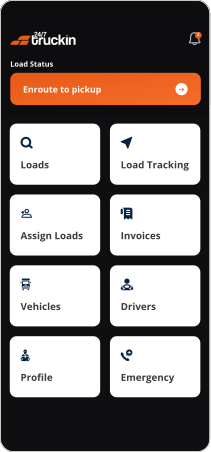
24/7 Truckin represents the current phase of trucking business modernization.
Carriers secure consistent opportunities through structured load board platforms. They manage dispatch through integrated systems. They monitor shipments through built-in tracking tools.
The future of the industry depends on structured control. Companies that operate with integrated freight logistics systems protect margins and improve scalability.
The history of trucking proves one constant truth: progress favors adaptation.
From diesel engine development to the interstate highway system, from the freight deregulation act to the electronic logging device mandate, every milestone demanded adjustment.
Digital freight management now defines the next competitive standard.
Carriers who adopt modern trucking technology operate with clarity. They secure freight consistently, reduce wasted time, and strengthen shipper trust.
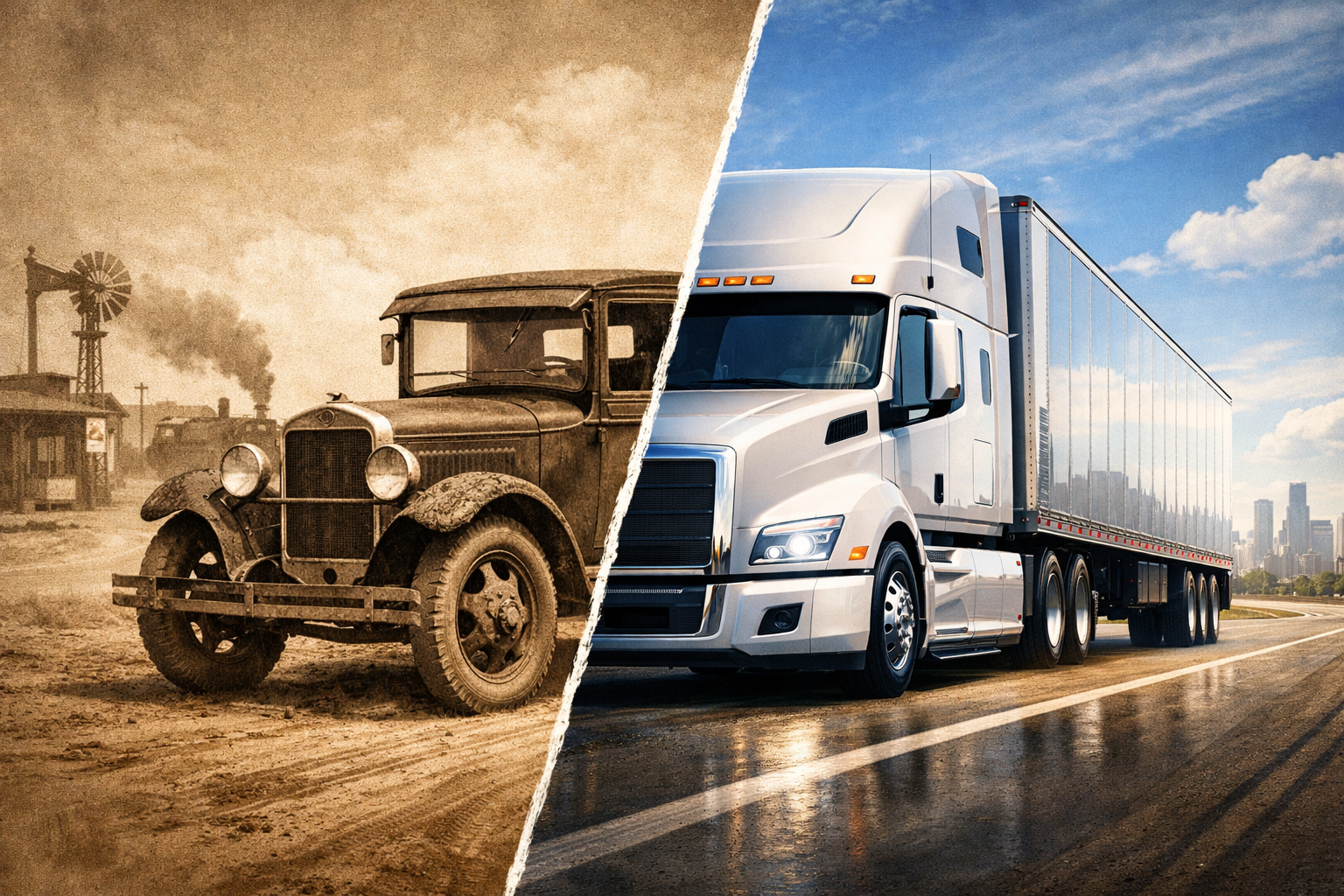
Trucking has evolved from horsepower to diesel power, from regional hauling to national networks, from paper logs to automated systems.
The next stage belongs to carriers who embrace structured digital ecosystems and operate smarter, not harder.