Introduction to Digital Freight Management
The trucking industry depends on coordination. Every shipment requires accurate load information, dependable routing, timely communication, and proper documentation.
In the past, these tasks were handled through phone calls, handwritten notes, and disconnected systems. While this approach worked when freight volumes were smaller, it struggles under modern demands.
Digital freight management introduces a structured and connected way to handle trucking operations.
Instead of managing loads, routes, and paperwork separately, carriers can bring all activities into one organized workflow. This creates clarity for drivers, dispatchers, and customers.
As freight markets grow more competitive, efficiency becomes essential. Carriers must control time, fuel, and administrative effort.
Digital freight management supports this by combining freight technology, real-time visibility, and centralized control. It allows trucking operations to move away from reactive problem-solving and toward planned, predictable performance.
[Digital freight management transforms scattered trucking tasks into one connected operational system.]
________________________________________________________________________________________________
TL;DR:
- Digital freight management organizes load matching, routing, tracking, and paperwork into one connected workflow instead of scattered manual processes.
- Traditional trucking operations struggle due to slow load searches, limited visibility, and document delays that reduce efficiency and income.
- Freight technology improves daily work through faster load matching, better route planning, real-time freight tracking, and structured communication.
- Data and freight visibility help carriers make smarter decisions, reduce errors, and plan profitable lanes over time.
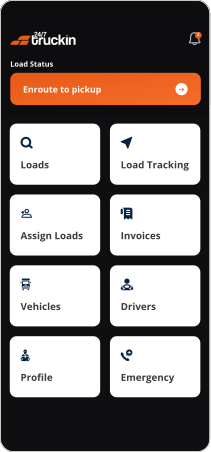
- 24/7 Truckin supports smarter freight operations by providing a unified platform that connects load management, tracking, routing, and documentation into one streamlined system.
________________________________________________________________________________________________
Why Traditional Trucking Operations Struggle
Traditional trucking operations were built around manual coordination. Load matching often depends on multiple calls, text messages, and personal contacts.
While relationships still matter, this method slows down decision-making. Drivers may spend long periods searching for loads instead of moving freight.
Paper-based documentation remains another major issue. Rate confirmations, bills of lading, and delivery receipts are often stored in different places. When information is misplaced or unclear, payment delays become more common.
This increases financial pressure on owner-operators and small carriers who rely on steady cash flow.
Visibility is also limited. Without freight tracking tools, dispatchers cannot easily monitor shipment progress. Customers call for updates, and drivers must interrupt their routes to respond. This reduces focus and increases error risk.
These problems are not caused by a lack of effort. They are caused by systems that cannot scale with modern logistics demands. As freight coordination becomes more complex, traditional methods become fragile.
Digital freight management replaces fragmented workflows with organized freight coordination and improved carrier efficiency.
[Outdated workflows create delays, confusion, and revenue loss across trucking operations.]
What Digital Freight Management Means
Digital freight management refers to the use of trucking software and logistics technology to control freight movement from booking to delivery. It connects several critical functions into one system:
- Load matching and scheduling
- Route planning and navigation
- Freight tracking and visibility
- Contract and document management
- Driver and dispatcher communication
Instead of handling each step separately, transportation management becomes centralized. This means decisions are based on shared information rather than assumptions. Drivers know where they are going. Dispatchers know what is happening. Customers know when freight will arrive.
For small carriers and owner-operators, this structure creates balance. They face the same pressures as large fleets but with fewer resources. Digital freight management allows them to compete using organized data and automated tools instead of manual effort alone.
Freight workflow becomes predictable. Instead of reacting to late updates or missing paperwork, carriers can control operations using freight visibility and system alerts. This turns trucking from a survival activity into a managed business process.
[Digital freight management unifies load discovery, routing, tracking, and paperwork into one workflow.]

How Technology Improves Daily Trucking Work
Technology reshapes daily trucking operations by simplifying routine tasks. Load matching becomes faster because systems present available loads based on location, equipment type, and timing. Drivers no longer rely on repeated phone calls or constant refresh cycles.
Route planning improves safety and consistency. Modern tools factor in road restrictions, traffic conditions, and weather patterns. This reduces the chance of delays caused by unsuitable routes. Predictable routing supports fuel efficiency and on-time delivery.
Freight tracking introduces transparency. Dispatchers and customers can monitor shipments without constant communication. This reduces interruptions and allows drivers to concentrate on driving. Freight visibility also improves accountability across the supply chain.
Communication benefits as well. Messages, load updates, and documents remain stored within one platform. Instead of using multiple apps, trucking operations rely on one structured channel. This reduces missed information and duplicated effort.
Over time, trucking productivity increases because time is no longer lost searching for data. Each task supports the next task. Freight coordination becomes systematic rather than improvised.
[Technology replaces guesswork with organized data and structured decision making.]
Benefits for Owner-Operators and Small Carriers
Owner-operators and small carriers manage both driving and administration. Digital freight management reduces this burden by automating repetitive work.
Time savings appear first. Load matching becomes quicker, which reduces idle hours and empty miles. Automated documentation shortens post-delivery processing and helps maintain accurate records.
Cost control follows. Better route planning reduces fuel waste. Fewer errors reduce chargebacks and disputes. Trucking operations become financially predictable rather than chaotic.
Decision-making improves as well. Instead of choosing loads based on availability alone, carriers can compare options using distance, timing, and expected return. This supports long-term income stability instead of short-term survival.
Digital freight management does not remove challenges, but it reduces unnecessary stress. It allows carriers to focus on profitable driving rather than administrative recovery.
[Digital systems help small carriers operate with the discipline of larger fleets.]
The Role of Data and Visibility in Freight
Data gives structure to logistics platforms. Every shipment produces information about time, cost, performance, and reliability. When organized, this data reveals patterns that improve planning.
Freight visibility ensures all parties see the same status. Drivers know their progress. Dispatchers see delays. Customers receive accurate estimates. This alignment reduces conflict and improves trust.
Historical data strengthens future decisions. Carriers can identify profitable lanes, recurring bottlenecks, and seasonal freight trends. This transforms experience into strategy.
Without data, trucking relies on memory and instinct. With data, trucking relies on measurable performance. The combination creates operational maturity and financial control.
Digital Freight Management and Long-Term Growth
Long-term growth requires consistency. Digital freight management supports growth by creating repeatable processes. New drivers integrate faster because systems guide them. Dispatchers manage higher volume because workflows remain stable.
Scalability becomes possible without losing control. Transportation management evolves from individual effort into system-based operations. This reduces burnout and supports expansion without chaos.
Customer expectations also change. Shippers demand transparency and reliability. Carriers who use freight technology meet these demands more easily. This strengthens relationships and protects contracts.
Growth does not come from more work alone. It comes from a better structure. Digital freight management provides that structure.
[Sustainable growth depends on organized freight workflows, not manual effort alone.]
Preparing for a Digital Trucking Future
The trucking industry continues to adopt logistics technology. Regulations, customer standards, and market competition all require better control systems.
Preparation begins by reviewing existing workflows. Where do delays occur? Where does confusion happen? These areas benefit most from digital tools.
Adoption does not mean abandoning experience. It means reinforcing it with structure. Drivers still negotiate. Dispatchers still plan. The difference lies in how information flows and how decisions are supported.
Carriers who adapt early gain resilience. Digital freight management helps maintain performance during market shifts and protects margins through efficiency.

How 24/7 Truckin Supports Smarter Freight Operations?
Digital freight management represents a practical evolution of trucking operations. It replaces fragmented methods with integrated freight coordination and real-time visibility.
As freight markets become more complex, structured systems become essential. Technology does not remove human judgment. It strengthens it by reducing distractions and improving accuracy.
24/7 Truckin focuses on supporting carriers through a unified logistics platform that connects load matching, route planning, freight tracking, and document handling into one workflow.
By improving trucking productivity and operational clarity, 24/7 Truckin helps drivers and small carriers operate confidently in a modern freight economy. Get in touch with us to learn more.